How to File a Water Damage Insurance Claim in Texas: Step-by-Step
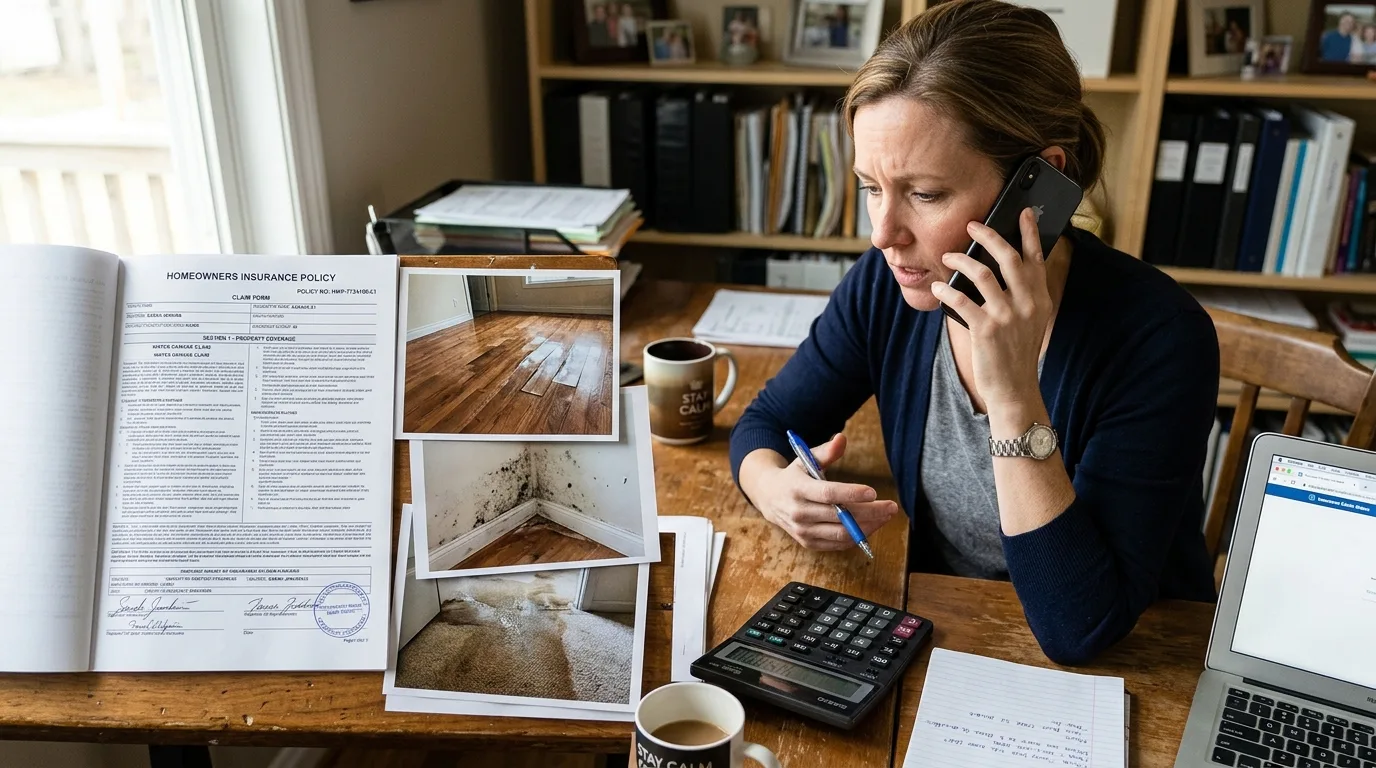
Filing a water damage insurance claim in Texas is more complex than most homeowners expect — and the decisions you make in the first 24–48 hours after discovering damage have a significant impact on whether your claim is approved, how quickly it’s paid, and how much you receive. This guide walks through the process step by step, with specific guidance for Little Elm homeowners navigating Denton County water damage claims.
In this post, we cover what to do before calling your insurer, how to document damage for maximum claim strength, the claim filing process, and common reasons claims are delayed or denied in Texas.
Water Damage in Little Elm? We Handle Insurance Documentation
We work directly with all major carriers. Call (877) 698-1311 for emergency response and full claim support.
What Texas Homeowner Policies Cover (and Don’t Cover)
Standard Texas HO-3 homeowner policies cover sudden and accidental water damage from internal sources. This includes burst pipes, appliance failures (washing machine, dishwasher, water heater supply line), HVAC condensate overflow, and toilet overflows. The critical word is “sudden” — most policies exclude damage from gradual leaks, slow seepage, or water that entered gradually over time rather than in a single discrete event.
What standard policies typically do not cover: flood damage from external water sources (rain, storm surge, overflowing waterways), sewer backup from municipal systems (requires a separate endorsement), and damage resulting from homeowner negligence or deferred maintenance. Slab leaks occupy a gray area — some Texas carriers cover them, others require a specific endorsement, and some exclude them categorically as gradual damage. Review your policy declarations carefully or ask your agent to clarify before assuming coverage.
Flood insurance requires a separate National Flood Insurance Program (NFIP) policy or private flood policy. There is a 30-day waiting period before NFIP coverage takes effect. Little Elm homeowners in or near FEMA floodplain zones around Lewisville Lake and Trinity River tributaries should verify whether their mortgage lender requires flood coverage.
Step 1: Document Everything Before Cleanup Begins
Documentation is the foundation of a successful insurance claim, and it must be done before any cleanup or restoration work begins — once water is removed and materials are dried, the original damage scope cannot be fully established. Take comprehensive photos and video of:
- All standing water with visible reference points (furniture, doorways) to establish depth and extent
- Every water-stained wall, ceiling, and floor surface
- Damaged contents — appliances, furniture, electronics, clothing, personal property
- The source of the water intrusion if identifiable (the ruptured pipe, the failed appliance connection, the overflowing fixture)
- Date and time stamps — use your phone’s camera, which automatically timestamps photos, or take a photo of a clock/newspaper in each shot
Document the structure’s condition before any materials are removed or moved. Once drywall is removed or furniture is relocated, the original scope of water contact cannot be re-established from the space alone.
Step 2: Stop the Water Source and Prevent Further Damage
Texas homeowner policies require you to take reasonable steps to prevent additional damage after a covered loss. Failure to mitigate — such as allowing water to continue running or not covering a damaged roof area — can affect your coverage for damage that occurs after you became aware of the problem.
Shut off the water main if a plumbing failure is involved. Cover any exterior opening (broken window, roof damage) with a tarp if it’s safe to do so. These steps demonstrate to your insurer that you acted responsibly. Do not, however, begin demolition, material removal, or major cleanup before your insurer’s adjuster has had an opportunity to inspect — or before you have documented everything as described in Step 1.
Need Help With Water Damage Documentation for Your Texas Claim?
Our team provides complete documentation packages for insurance claims. Call (877) 698-1311.
Step 3: Notify Your Insurance Company Promptly
Most Texas homeowner policies require prompt notification of a covered loss — some policies have specific time windows (72 hours, 7 days, or “as soon as practicable”). Notify your insurer the same day you discover significant water damage, even if it’s a weekend. Most major carriers have 24/7 claims lines for emergency situations.
When you call, provide: your policy number, the date and time of the damage, a brief description of what happened, and confirmation that you’ve shut off the water source and begun documenting. Avoid speculating about the cause or extent until you’ve had a professional assessment — it’s fine to say “I discovered significant water damage from what appears to be a pipe failure” rather than committing to a specific cause that a professional assessment might refine.
Step 4: Get a Professional Assessment Before the Adjuster Arrives
Having your own independent moisture assessment and damage documentation from a licensed restoration contractor before the insurance adjuster visits gives you an equal informational footing. Insurance adjusters work for the insurer, not the homeowner — their job is to accurately assess the claim, but they do not advocate for the highest possible payout. A restoration contractor’s documentation — thermal imaging showing hidden moisture, moisture meter readings throughout the structure, and a detailed scope of work — supplements the adjuster’s visual inspection with technical data that supports a more comprehensive estimate.
Our team provides complete claim documentation packages including moisture maps, equipment logs, before/after photos, and detailed scope of work for every restoration project in Little Elm and Denton County. This documentation is specifically formatted to support the carrier review process and has consistently helped homeowners receive comprehensive settlements rather than partial payments based on visual-only assessment.
Step 5: Understand the Claim Review Process
After filing your claim, the insurer will assign an adjuster to inspect the damage and write a claim estimate. For significant water damage events, this process typically takes 3–7 business days after the initial report. You have the right to dispute the adjuster’s estimate if you believe it’s incomplete — a restoration contractor’s competing estimate and documentation can support your position.
Texas law (Texas Insurance Code) provides homeowners with specific rights regarding claim timelines: insurers must acknowledge receipt within 15 days, accept or deny the claim within 15 business days after receiving all documentation, and pay approved claims within 5 business days of acceptance. If your insurer is not meeting these timelines, contact the Texas Department of Insurance.
What Affects Insurance Claim Outcomes for Little Elm Homeowners
The documentation quality is the primary variable. Claims with comprehensive pre-cleanup photos, professional moisture assessments, and detailed scope of work documentation receive more complete settlements with less friction than claims based primarily on verbal descriptions or post-cleanup photos. Claims where restoration began before documentation was completed are almost always disputed.
Insurance claim restoration for water damage in Little Elm averages $2,087–$2,144 for standard events, but the insured amount depends on what your documentation establishes. Hidden moisture that wasn’t documented before drying often doesn’t appear in the claim. A restoration contractor who provides thorough documentation has a direct positive impact on your claim outcome — which is why working with a contractor who understands insurance documentation is worth asking about when you call for emergency response.
Frequently Asked Questions About Water Damage Insurance Claims in Texas
How long do I have to file a water damage claim in Texas?
Standard Texas homeowner policies require “prompt” notice — typically within 30–90 days of discovery. Some policies have specific written notice deadlines. File as soon as damage is discovered, and do not wait to “see if it dries out” — the delay can affect coverage for damage that occurred after you were aware of the problem.
Can I choose my own water damage restoration contractor in Texas?
Yes — you have the right to choose your own licensed restoration contractor. Your insurer cannot require you to use their preferred vendor. However, make sure your contractor is licensed, IICRC-certified, and provides documentation in a format that supports insurance claim processing. We work with all major carriers serving Denton County and are experienced with their documentation requirements.
What if the insurance company underpays my water damage claim?
First, request the detailed estimate from the insurer and compare it to your restoration contractor’s scope of work. Request a supplemental review for any items missing from the insurer’s estimate. If the dispute continues, you can hire a public adjuster to represent your interests, or invoke the appraisal process in your policy (which involves each party selecting an independent appraiser). The Texas Department of Insurance also handles consumer complaints about claim handling.
Water Damage Insurance Claim in Little Elm? We Help with Documentation
Direct insurance billing and full claim documentation for all Denton County homeowners. Call (877) 698-1311.
Related: