Mold After Water Damage: Little Elm's 48-Hour Rule Explained
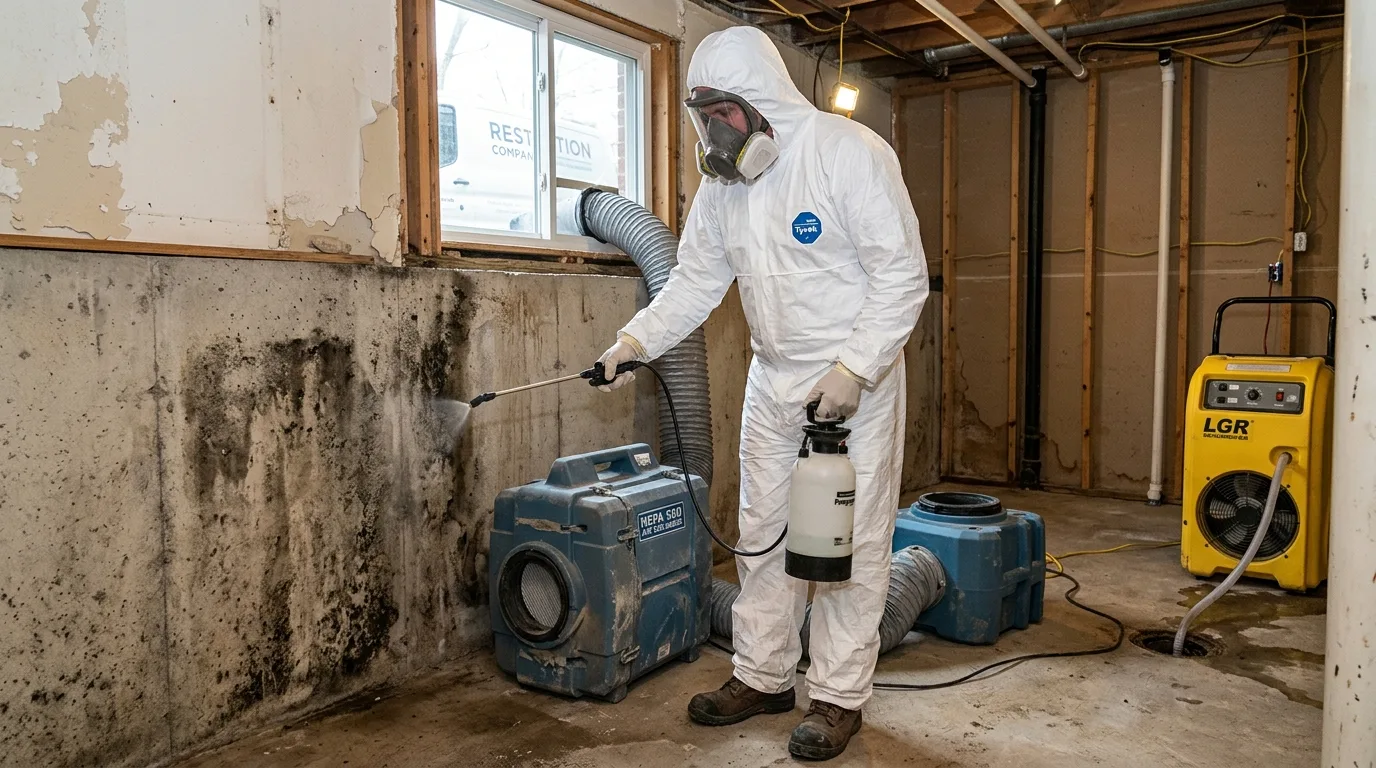
In the restoration industry, the “48-hour rule” is well known: mold can begin colonizing wet organic materials within 24–48 hours of a water event. What’s less understood is why that window is shorter in Little Elm than in many other regions — and what happens after the window closes if professional structural drying wasn’t in place. This guide explains the mold formation timeline in North Texas, why Little Elm homeowners face a compressed window, and what to do if you suspect mold has already established in your home.
In this post, we cover how mold forms after water damage, why Little Elm’s climate accelerates the timeline, what the stages of mold growth look like, and when professional mold remediation is necessary.
Water Damage in Your Little Elm Home? Don't Risk Mold.
24/7 emergency response — call (877) 698-1311 before the 48-hour window closes.
How Mold Forms After Water Damage
Mold is always present in any indoor environment — as microscopic spores floating in the air and resting on surfaces. Under normal conditions, indoor mold spore concentrations are too low and surfaces too dry for colonization to occur. Water damage changes both conditions simultaneously: it raises indoor relative humidity dramatically and provides wet organic surfaces (drywall paper, wood framing, carpet backing, insulation) where spore germination can begin.
The germination process requires three things: moisture, a food source (organic material), and the right temperature. Indoor building materials provide abundant food sources. Water damage provides moisture. And Little Elm’s summer temperatures provide the temperature component — particularly in unconditioned spaces like garages, attics, and crawl spaces where temperatures can reach 100°F+ during a Texas summer. In these conditions, the 48-hour industry estimate compresses to as little as 12–18 hours on the hottest days of the year.
Once germination occurs, mold colonies grow by consuming organic material and releasing spores — which begin the cycle in adjacent areas. A mold colony in a wall cavity will spread to adjacent framing and insulation within days if the moisture source is maintained. HEPA-filtered air scrubbers and negative air pressure containment are required to prevent this spread during professional mold remediation in Little Elm.
Why Little Elm’s Climate Makes the 48-Hour Rule a 24-Hour Rule in Summer
The standard 48-hour mold window is derived from laboratory conditions at moderate temperature (68–77°F) and high humidity. Little Elm’s summer conditions deviate from this baseline in ways that compress the timeline. June through August temperatures regularly exceed 95°F outdoors and can reach 110°F+ in unconditioned attic spaces. A wet wall cavity in a closed-up Little Elm home during summer — no AC running, temperatures above 90°F, humidity elevated by the water event — provides near-ideal mold growth conditions that can produce visible colonization within 18–24 hours.
This temperature effect is why the first call after a summer water event in Paloma Creek or Harvest is so time-critical. A homeowner who discovers a washing machine overflow at 6pm, cleans up the visible water manually, and goes to bed without calling for professional structural drying may return the next morning to find the wall cavity behind the appliance has already begun developing mold — not from negligence, but from underestimating how fast North Texas summer heat accelerates the timeline.
In winter, the timeline extends — lower temperatures slow mold metabolism significantly, giving homeowners more response time. But Little Elm’s winter burst-pipe events are accompanied by rapid temperature recovery as outdoor conditions warm after the freeze, which can restore near-summer conditions in a few days even in January or February.
Water Damage Recently? Don't Wait for Visible Mold.
We deploy dehumidification services and HEPA air scrubbers same-day throughout Little Elm. Call (877) 698-1311.
What the Stages of Mold Growth Look Like After Water Damage
Hours 0–24: Mold spores germinate on wet surfaces. No visible mold is present. Relative humidity inside the wet assembly is elevated. This is when professional structural drying is most effective — industrial dehumidifiers can pull the humidity below the germination threshold before colonization becomes established.
Hours 24–48: Initial colonies form — appearing as a faint haze or fuzz on wet drywall paper, wood framing, or insulation backing. At this stage, surface treatment combined with HEPA vacuuming and continued drying can interrupt the process without material removal in some cases. Professional assessment is required to determine whether in-place treatment is viable.
Days 3–7: Established colonies spread across affected surfaces. Visible mold in multiple spots in the affected area. Smell becomes detectable. At this stage, material removal is typically required for all affected porous surfaces — treatment alone is not sufficient to prevent recolonization from embedded mold within the material matrix. IICRC mold remediation protocols apply.
Weeks 2–4: Mold has colonized adjacent materials via air movement through wall cavities and HVAC registers. Whole-room or multi-room remediation may be required. Mold inside HVAC components — air handler coils, ductwork, supply plenums — can spread to every room served by the system. This is the most expensive stage, requiring remediation of structural components plus HVAC system cleaning.
When You Need Professional Mold Remediation in Little Elm
Professional mold remediation is required when: visible mold covers more than 10 square feet (roughly 3 feet × 3 feet), mold is present in HVAC components, the affected area includes materials requiring containment to prevent spread during disturbance, or health symptoms (respiratory issues, persistent headaches, worsening allergies) are associated with specific rooms in the home.
For water damage events in Little Elm where professional structural drying was deployed within 24 hours, mold is often prevented entirely — the drying brings material moisture content below the threshold for mold growth before colonization establishes. For events where 48+ hours passed before professional drying began, mold assessment is a standard part of the restoration scope. Dehumidification services without mold assessment for delayed-response events is an incomplete treatment that may leave hidden mold in wall cavities.
Texas law requires licensed mold remediators and separate licensed mold assessment consultants for events affecting more than 25 contiguous square feet. Our team includes both credentials and provides independent post-remediation clearance testing to confirm successful remediation before reconstruction begins.
Frequently Asked Questions About Mold After Water Damage in Little Elm
Can mold grow in Little Elm in winter after water damage?
Yes — though the timeline is longer than summer. Winter temperatures in Little Elm typically range from 40–65°F indoors, which slows but does not stop mold metabolism. Most common indoor molds can grow at temperatures as low as 41°F. A wet wall cavity in a Little Elm home in January will produce mold in 5–10 days rather than 24–48 hours — still fast enough that professional structural drying within 48 hours of a winter burst-pipe event is important.
How do I know if mold has already grown after water damage in my home?
The most reliable indicators are: visible fuzzy growth on wet surfaces (any color — black, green, white, gray), a musty or earthy odor in the affected room that doesn’t clear with ventilation, and health symptoms (respiratory irritation, headaches) that improve when you leave the house. Professional thermal imaging and moisture assessment can identify hidden mold behind walls and under floors before it becomes visible from the room side.
Is surface-only mold treatment sufficient for Little Elm homes?
No — surface treatments (spray antimicrobials, bleach application) address only the visible surface growth, not the mold embedded in the matrix of porous materials. Drywall paper that has been colonized has mold throughout its thickness, not just on the surface. Surface treatment of such materials provides temporary cosmetic improvement while active mold continues to grow from within the material. IICRC protocols call for removal of colonized porous materials — not surface-only treatment.
Act Before the 48-Hour Window Closes — Little Elm Water Damage Response
24/7 emergency structural drying and mold prevention for Little Elm and all of Denton County. Call (877) 698-1311.
Related: