Flood Damage Restoration Guide for Little Elm, TX Homeowners
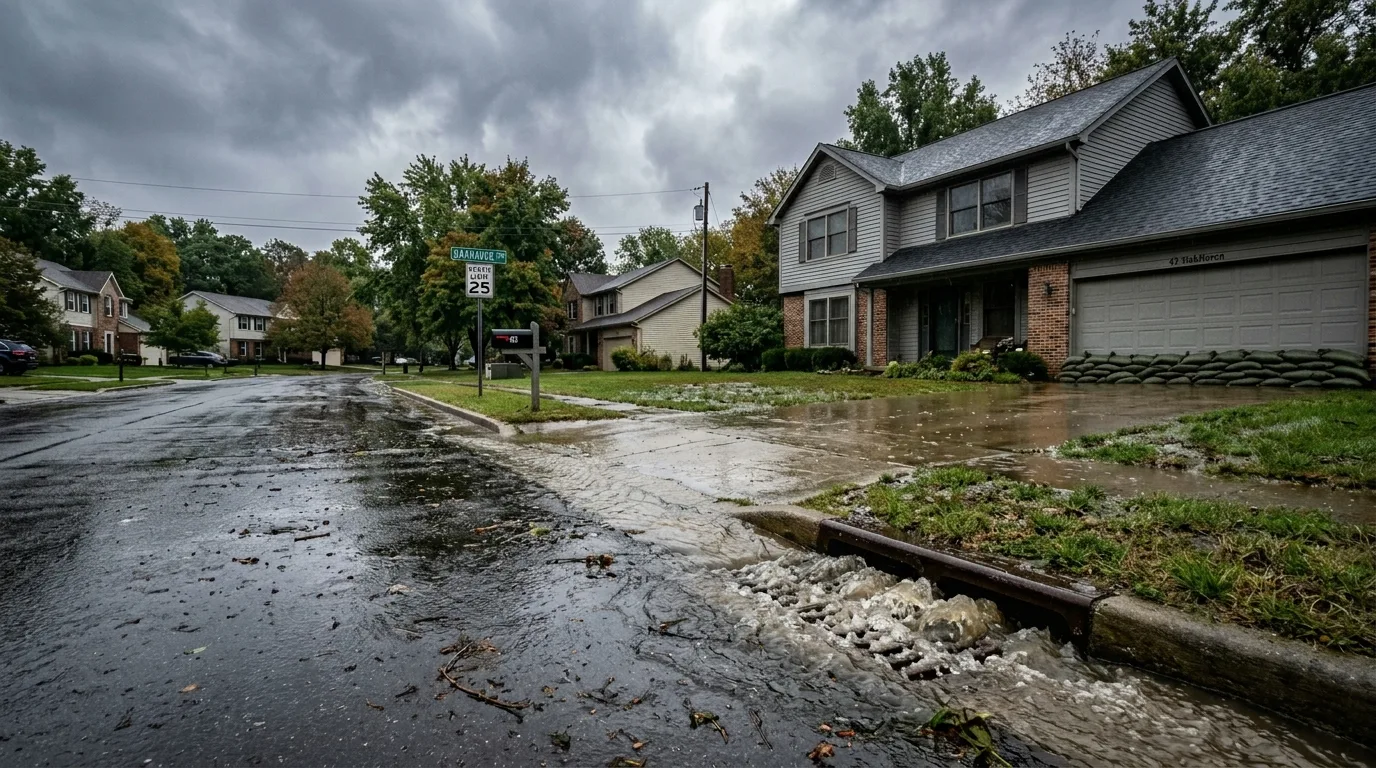
Not all water damage is the same — and flood damage is in a category of its own. When spring storm flooding enters your Little Elm home from outside, it carries contamination, force, and volume that pipe-burst damage rarely matches. This guide walks through the complete flood damage restoration process for Little Elm homeowners, including what to do first, how the restoration process works, and what your insurance likely covers.
In this post, we cover the unique flood risks facing Little Elm properties, the step-by-step restoration process, cost expectations, and insurance guidance for Denton County flood events.
Flood Damage in Your Little Elm Home? Call Now.
24/7 emergency flood response for Little Elm and Denton County. Call (877) 698-1311.
Little Elm’s Flood Risk: What the Data Shows
Little Elm faces a documented flood risk from two primary sources. First Street Foundation identifies 1,021 Little Elm properties — 5.8% of all homes — at flood risk over a 30-year period. Two flood protection systems affect the most vulnerable properties: the Carrollton-Elm Fork Trinity River System (covering 907 properties) and the Denton Creek System (718 properties). Over the next 30 years, a 1-in-100-year flood event would affect 703 Little Elm properties.
The second risk is the proximity of Lewisville Lake along Little Elm’s southern border. The lake creates elevated ambient moisture throughout the Water’s Edge and lakefront neighborhoods, and significant storm events can produce wave action and water-table rises that affect properties in ways that aren’t captured in standard FEMA floodplain maps. Homes on Lewisville Lake that have never flooded through standard rainfall events can experience water intrusion during severe thunderstorm conditions that push lake levels rapidly upward.
Spring severe weather season (March through May) is when both risk factors peak simultaneously — Trinity River tributary flooding from heavy rain and Lewisville Lake level rises driven by the same storm systems. This is the period when flood damage restoration demand peaks across Little Elm and Denton County.
Step-by-Step Flood Damage Restoration Process
Phase 1: Safety Assessment and Initial Entry. Before anyone enters a flooded space, the structural stability must be confirmed and all electrical systems serving flooded areas must be de-energized. Standing water from outdoor flooding contains contamination — it should be treated as Category 3 (black water) until proven otherwise through testing. Never enter a flooded space with active electrical service.
Phase 2: Water Classification and Documentation. The flood water is classified by contamination level (almost always Category 3 for outdoor flooding), and the full extent of water intrusion is documented with photos, video, and moisture measurements. This documentation is the foundation of the insurance claim and the restoration scope.
Phase 3: Bulk Water Extraction. Industrial extraction equipment removes standing water as quickly as possible. Submersible pumps handle deeper standing water; truck-mounted extractors handle the remaining water in flooring and lower wall materials. The goal of extraction is to remove bulk water before it penetrates further into building assemblies.
Phase 4: Material Assessment and Removal. All porous materials that contacted Category 3 flood water must be removed — carpet, padding, drywall below the flood line, insulation, and any wood structural members with visible contamination. This material removal is followed by HEPA vacuuming and antimicrobial treatment of all remaining hard surfaces.
Phase 5: Structural Drying. Industrial dehumidifiers and air movers are placed throughout the affected area and run continuously until all remaining structural materials reach target moisture content as measured by daily meter readings. This phase typically takes 5–7 days for flood events, longer if the exterior soil remains saturated.
Phase 6: Reconstruction. After drying is confirmed, reconstruction begins — replacing removed drywall, insulation, flooring, and trim. Permits are required through Little Elm’s MyGov system for structural repairs. We coordinate all permit applications as part of the restoration project.
Need a Flood Damage Assessment in Little Elm?
Same-day assessments available. Call (877) 698-1311 or submit online for Denton County flood damage restoration.
What Makes Flood Damage Different From Other Water Damage
The critical distinction is contamination. Outdoor flood water — regardless of what its original source was — is classified as Category 3 black water once it has been in contact with soil or sewage infrastructure. This means the approach to materials is fundamentally different: porous materials (carpet, drywall, insulation, any porous wood product) below the flood line cannot be dried in place and reused. They must be removed and replaced.
Attempting to dry contaminated materials in place produces a space that may look clean but retains bacteria, fungi, and organic contamination inside the material matrix — producing persistent odor, ongoing mold growth, and health risks for occupants. This is why flood damage restoration is more expensive per square foot than clean-water damage: the material replacement requirement is non-negotiable, not a choice based on condition assessment.
The structural drying requirement is also more demanding for flood events. Because exterior soil is saturated during and after a storm event, it continues contributing moisture to the structure through vapor infiltration and foundation perimeter seepage. Dehumidification services must run longer to overcome this ongoing moisture source, compared to a clean-water event where the source is a single contained pipe.
Insurance Coverage for Flood Damage in Little Elm
This is the most important point for Little Elm homeowners to understand: standard homeowner insurance does not cover flood damage from external water sources. Standard HO-3 policies cover water damage from internal sources (pipes, appliances) but explicitly exclude flooding from rain, storm surge, overflowing waterways, or any water that enters from outside the structure.
Flood coverage requires a separate policy — either through the National Flood Insurance Program (NFIP) or a private flood insurance carrier. NFIP policies have a 30-day waiting period before coverage takes effect, which means you cannot purchase flood insurance the day before a storm and have immediate coverage. Properties in FEMA-designated Special Flood Hazard Areas near Lewisville Lake or Trinity River tributaries may be required to carry flood insurance by their mortgage lender.
If you experienced flood damage without flood insurance, FEMA Individual Assistance may be available if a presidential disaster declaration has been issued for Denton County. The declaration process takes time — document all damage thoroughly regardless of current insurance status, as documentation is required for any future claim or assistance application.
What Affects the Cost of Flood Damage Restoration in Little Elm
Flood damage restoration in Little Elm costs $4–$12/sq ft for Category 2 events and $7–$20+/sq ft for Category 3 outdoor flooding. A flooded ground floor in a 1,200-sq-ft home facing full material replacement could easily reach $15,000–$25,000 for cleanup and reconstruction before any structural damage repairs are added. The depth and duration of flooding are the primary variables beyond the contamination category — deeper water affects more wall height, requiring more drywall replacement, and longer duration allows contamination to penetrate further into structural members.
Frequently Asked Questions About Flood Damage in Little Elm
Is outdoor flooding covered by my Little Elm homeowner insurance?
No — standard homeowner policies exclude flood damage from external water sources. This coverage requires a separate flood insurance policy. Contact your insurer to verify your specific policy language, and consider purchasing a flood policy if you live near Lewisville Lake or in a Trinity River tributary flood zone in Denton County.
How do I find out if my Little Elm property is in a flood zone?
Use FEMA’s Flood Map Service Center (msc.fema.gov) to look up your property’s flood zone designation. Properties in Special Flood Hazard Areas (zones beginning with A or V) face the highest risk. First Street Foundation’s Flood Factor tool provides an alternative risk assessment that may show different results from FEMA maps for some Little Elm properties.
How long does flood damage restoration take for a Little Elm home?
A single-story flooded ground floor typically requires 5–10 days for extraction, decontamination, and structural drying, plus 2–5 weeks for reconstruction depending on scope. Multi-story events or properties where exterior soil remains saturated after the initial flood take longer. We provide a written timeline estimate at the initial assessment.
Little Elm Flood Damage Restoration — Call for Immediate Help
We serve Little Elm, Lewisville, Denton, Frisco, and all of Denton County. Call (877) 698-1311 for 24/7 flood damage cleanup.
Related: