Signs of Water Damage in Your Little Elm Home: Don't Ignore These
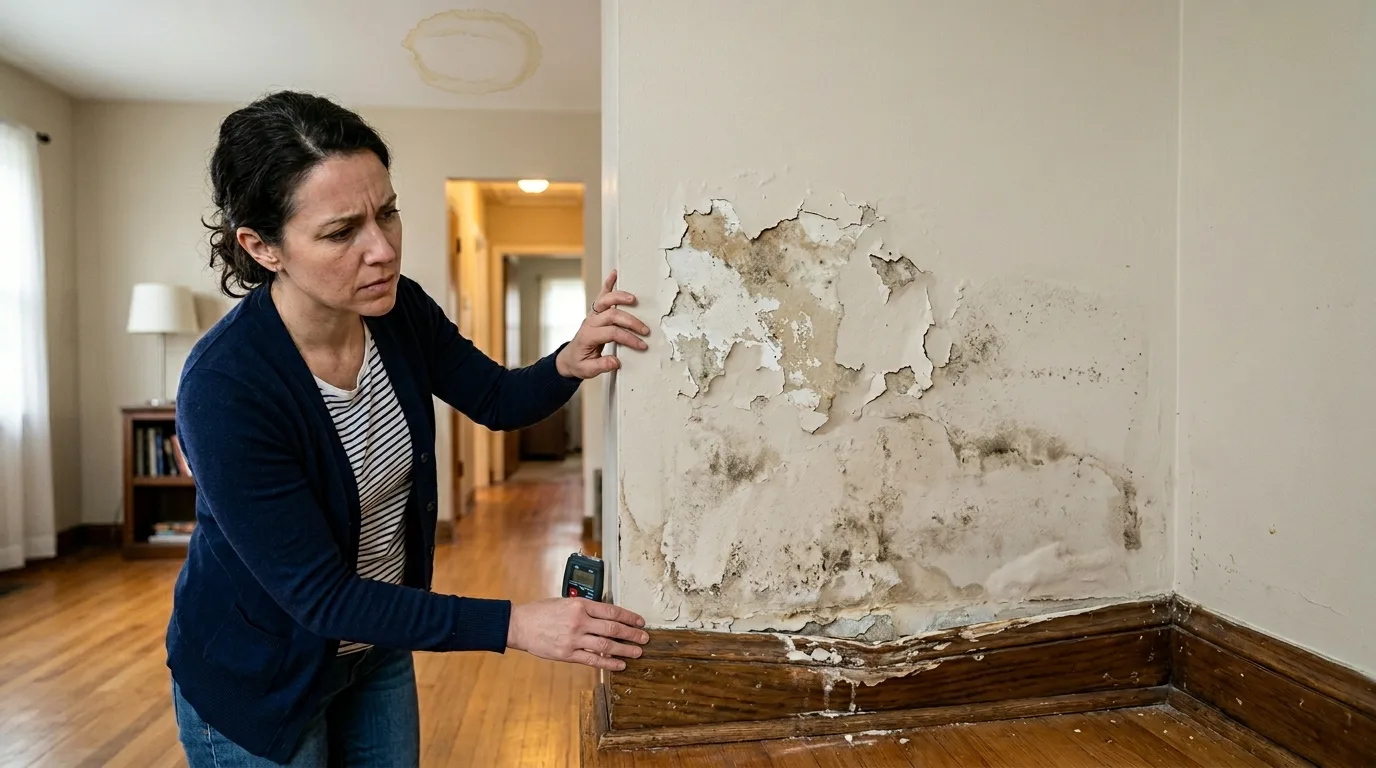
Water damage in a Little Elm home rarely announces itself dramatically. More often, it works quietly — inside walls, under floors, above ceilings — for weeks or months before producing a visible sign that something is wrong. By the time the sign is obvious, the damage is already substantial. This guide teaches you to recognize the early indicators that water is in places it shouldn’t be, so you can act before a $2,000 repair becomes a $15,000 restoration project.
In this post, we cover the most commonly missed early warning signs, what they indicate, and when to call for professional assessment in Little Elm and Denton County.
Think Your Little Elm Home Has Hidden Water Damage?
We provide same-day moisture assessments for Denton County homes. Call (877) 698-1311.
Why Water Damage Signs Are Easy to Miss in Little Elm Homes
Little Elm’s housing stock includes a high proportion of newer construction — more than half the homes in the city were built after 2005 during the rapid growth phase that turned a small lakeside community into one of the fastest-growing cities in Texas. New homes have a false reputation for being damage-free: their components are new, but their construction quality is variable, and the Denton County clay soil environment stresses every slab foundation and under-slab plumbing system regardless of age.
The combination of new-home construction with slab foundations and PEX plumbing (which solves the clay-soil pipe stress problem by routing pipes through attics) creates a specific set of water damage risks that aren’t visible until they manifest — roof penetrations, HVAC drain lines, attic pipe connections, and window flashings are the most common failure points in Harvest and Union Park homes. Understanding what to look for in these specific locations is the most valuable knowledge a Little Elm homeowner can have.
The 8 Warning Signs You Should Never Ignore
1. Water bill spike without explanation. An unexplained 15–30% increase in your monthly water bill is the most reliable indicator of a hidden plumbing leak — often a slab leak or toilet supply line drip that hasn’t yet produced visible signs. In Little Elm, summer months (June–August) when water bills are normally higher for irrigation can mask this signal. Compare your bill to the same month in the previous year, not just the previous month.
2. Warm spot on a hard floor. A localized area of floor that feels noticeably warmer than adjacent flooring — especially in a bathroom, kitchen, or laundry room — is a classic indicator of a hot-water supply line slab leak. The hot water escaping under the slab is heating the concrete above it. This is worth immediate professional assessment because slab leaks that produce warm spots have typically been running for weeks.
3. Musty or earthy odor in a specific room. A persistent musty smell that doesn’t clear with ventilation — especially in a bathroom, under a sink, or in a specific corner of a room — indicates microbial growth inside a wall cavity or under flooring. In Paloma Creek homes, this is most commonly associated with slow plumbing leaks at toilet flanges, shower pan failures, or slow drain line leaks inside wall cavities. Mold remediation is typically needed once this odor is present.
4. Discoloration or staining on walls and ceilings. Yellow, brown, or gray stains on ceilings or walls indicate that water has passed through or is trapped inside the assembly. In newer Little Elm construction, these stains most commonly indicate roof leak activity at a penetration point, ice dam damage, or HVAC condensate overflow from second-floor air handlers.
5. Peeling or bubbling paint. Paint separating from the wall surface in a blister or bubble pattern indicates moisture trapped between the paint film and the wall substrate. This is distinct from simple paint aging — bubbling paint that reforms after being popped indicates an ongoing moisture source, not a one-time wet event.
6. Soft, spongy, or bouncing floor areas. Floor sections that feel soft underfoot, spring when walked on, or produce a hollow sound are indicating subfloor delamination — the subfloor materials have absorbed moisture and lost structural integrity. This is a direct indicator of prolonged moisture exposure from below (slab leak) or above (appliance overflow that wasn’t fully dried).
7. New cracks in interior drywall near floor level. While minor shrinkage cracks in drywall are normal in Texas, new cracks appearing at corners of windows and doors, or horizontal cracks near floor level, can indicate foundation movement driven by slab-leak moisture changes in the surrounding clay soil. The Denton County clay soil that causes slab leaks is the same soil that moves significantly when water is added or removed from the area immediately around the foundation.
8. HVAC running longer than usual without cooling improvement. An air conditioning system working harder to maintain temperature — especially in a Harvest or Union Park home with a second-floor air handler — can indicate that the supply plenum or ductwork is in a wet or high-humidity environment. HVAC systems in wet attic or closet spaces suffer efficiency losses from humidity, and water damage in the HVAC space can spread throughout the home through the duct system.
Spotted a Warning Sign? Get a Professional Moisture Assessment
We serve Little Elm and all of Denton County with same-day assessments. Call (877) 698-1311.
What to Do When You Find a Warning Sign
The most important action after noticing any of these warning signs is to have a professional moisture assessment performed before taking any action yourself. Poking at suspicious wall areas, pulling up flooring, or running fans on questionable areas can all make the situation worse if there is an active mold situation that needs containment before disturbance.
A professional moisture assessment uses thermal imaging and calibrated moisture meters to identify wet areas inside walls, ceilings, and floors without destructive access. The assessment maps the extent of moisture and identifies probable sources — information that lets you understand the full scope of what you’re dealing with before any work begins. This assessment also provides the documentation that insurance carriers want to see when water damage claims are submitted.
After an assessment confirms moisture, the source is addressed first (pipe repaired, roof flashing sealed, HVAC drain cleared) before restoration of wet materials begins. Restoring materials without fixing the source means the same damage recurs — a cycle that some Little Elm homeowners have experienced multiple times with the same area of their home before identifying the actual root cause.
Cost Factors for Water Damage Detected Early vs. Late
The financial case for paying attention to early warning signs is straightforward in Little Elm’s market. A slab leak caught through a water bill spike — before visible floor damage appears — typically costs $2,000–$5,000 for repair and dehumidification. The same slab leak discovered after floor buckling has appeared has already produced $5,000–$15,000 in structural damage on top of the pipe repair cost. Adding mold remediation — which is often required when damage goes undetected for more than 4–6 weeks — adds another $2,000–$8,000 depending on the area affected.
Water damage restoration averages $2,087–$2,144 in Little Elm for a standard cleanup scope. This benchmark assumes relatively prompt detection and response. Delayed-detection events in Denton County homes consistently produce costs 3–5x above this average because the area of damage and the mold remediation requirements both scale with detection time.
Frequently Asked Questions About Water Damage Signs in Little Elm
How can I tell if my Little Elm home has a hidden slab leak?
The three most reliable indicators are an unexplained water bill increase, a warm spot on the floor above a hot-water line, and the sound of running water when all fixtures are off. Any one of these warrants a professional slab leak assessment. In Paloma Creek and Savannah homes with copper plumbing under the slab, these signs appear more frequently than in newer PEX-plumbed homes.
What does mold smell like in a house?
Mold produces a musty, earthy odor that some describe as similar to wet cardboard or damp soil. It’s distinct from normal house smells and tends to be localized to specific areas rather than diffuse throughout the home. If you notice this smell in a specific bathroom, closet, or room corner in your Little Elm home, it warrants investigation — the smell indicates active mold growth, not just past water damage.
Should I try to find the source of water damage myself?
Identifying obvious external signs yourself is fine — a dripping pipe under a sink or a stain on the ceiling after rain. But probing walls, pulling up flooring, or disturbing suspicious areas without professional moisture assessment can spread mold spores if active mold is present. Have a professional use thermal imaging and moisture meters to map the extent before any destructive investigation begins.
Don't Let Small Signs Become Big Repairs in Little Elm
Call (877) 698-1311 for a professional moisture assessment. We serve Little Elm, Frisco, Lewisville, and all of Denton County.
Related: