Lewisville Lake Water Damage: What Lakefront Homeowners Should Know
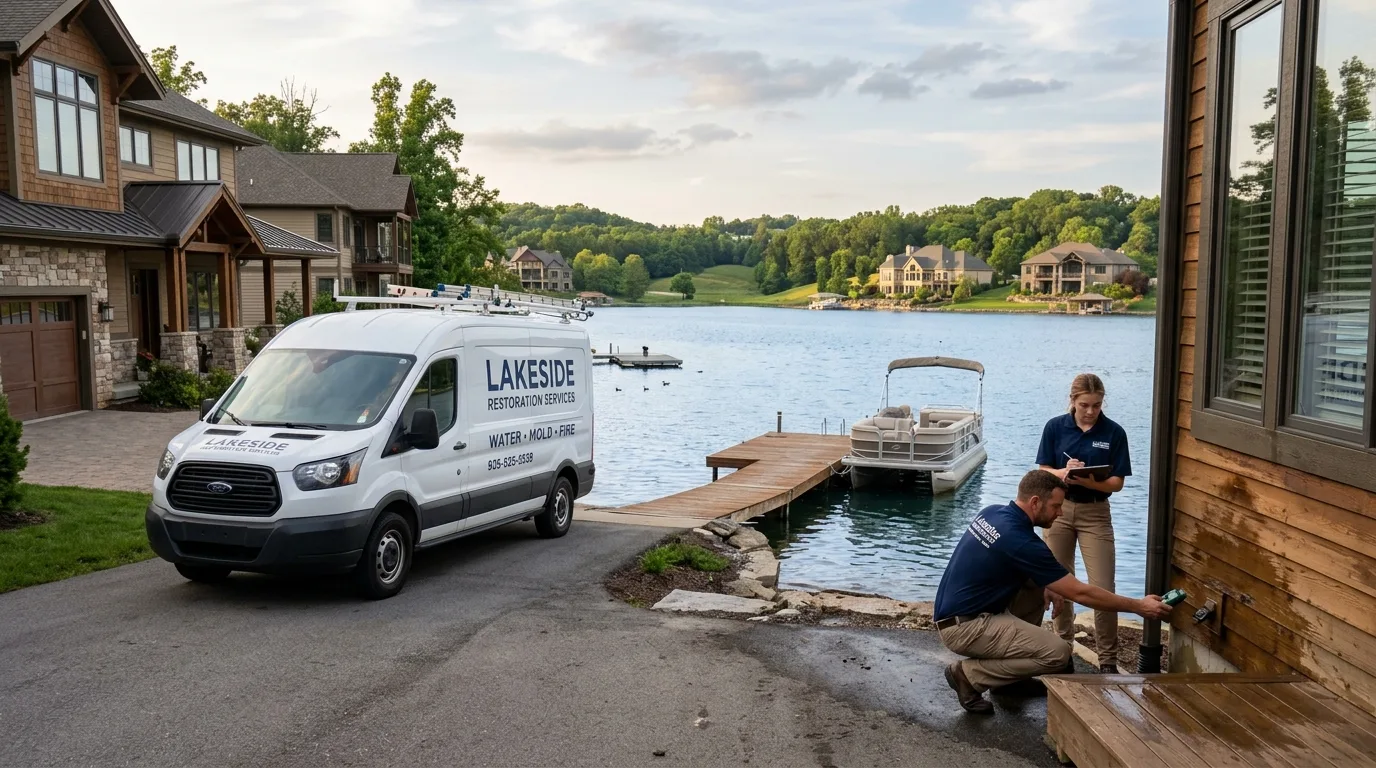
Owning a home on or near Lewisville Lake in Little Elm carries a set of water damage risks that most Texas homeowners have never encountered before. The combination of proximity to a major reservoir, fluctuating lake levels, elevated ambient humidity, and position within the Trinity River watershed creates a moisture environment distinct from inland Little Elm neighborhoods. This guide is written specifically for homeowners in Water’s Edge, lakefront communities along FM 423, and any Little Elm property within a quarter mile of the Lewisville Lake shoreline.
In this post, we cover the unique water damage risks for lakefront homes, how Lewisville Lake levels affect structural moisture, prevention strategies specific to lake-adjacent properties, and what to do when damage occurs.
Lakefront Property Near Lewisville Lake? Get a Moisture Assessment.
We specialize in Denton County lakefront water damage. Call (877) 698-1311.
Why Lewisville Lake Creates Unique Water Damage Risk
Lewisville Lake is a major U.S. Army Corps of Engineers reservoir that borders Little Elm’s southern and southeastern edge. The lake covers approximately 29,000 acres at normal pool and serves as a primary water supply for the Dallas–Fort Worth region. Its size and reservoir management role mean that lake levels fluctuate significantly — dropping during drought periods when releases are managed for downstream water supply, and rising during flood control operations when major storm events produce excessive inflow from the Trinity River watershed.
These fluctuations create water damage risks that standard inland homeowners don’t experience. When lake levels rise rapidly during spring flood events, water table elevation near the shoreline rises proportionally — sometimes raising groundwater within inches of residential foundation levels in low-lying lakefront neighborhoods. Homes that have never experienced surface flooding can still experience foundation moisture intrusion and subfloor saturation from water table rise alone, without any visible flooding event.
The ambient humidity near Lewisville Lake is measurably higher than inland Little Elm throughout the year. This elevated baseline humidity — driven by evaporation from 29,000 acres of open water surface — means that lakefront homes have a higher year-round background moisture level in wall cavities and crawl spaces than homes 2–3 miles inland. This elevated baseline reduces the additional moisture required to trigger mold growth after any water damage event, compressing the mold timeline further than even Little Elm’s general warm-climate reduction from the standard 48-hour rule.
Water Table Risk for Homes in Water’s Edge and Adjacent Communities
The Water’s Edge community in Little Elm sits directly along the Lewisville Lake shoreline — a lakefront location that provides exceptional lake views and access but also the highest water table exposure of any neighborhood in Little Elm. Homes in this community on slab foundations in the lowest-elevation sections can experience foundation moisture intrusion during extended wet periods when the water table rises to within 12–18 inches of the slab elevation.
This form of water damage — vapor and liquid moisture migrating upward through and around the foundation slab rather than entering from a failing pipe or storm event — is different from standard plumbing-failure water damage and requires different management approaches. Sump systems, interior drainage solutions, and vapor barrier reinforcement are the primary structural responses. Structural drying alone without addressing the water table source provides only temporary relief before moisture levels return.
First Street Foundation data confirms that 1,021 Little Elm properties face flood risk over 30 years, with Lewisville Lake’s proximity contributing to water table risk beyond the FEMA floodplain mapping that focuses primarily on surface flooding pathways. Lakefront homeowners should request a site-specific elevation certificate from a licensed surveyor to understand their property’s actual elevation relative to the 100-year and 500-year flood elevations for their location.
Lakefront Water Damage in Little Elm — Specialized Response Available
Denton County lake-area water damage experts. Call (877) 698-1311 for assessment and emergency response.
How Lake Level Fluctuations Affect Structural Moisture
Lewisville Lake’s operating level changes by 5–15 feet between drought and flood-control operations. During drought years — when lake levels can drop 10+ feet below normal pool — lakefront properties actually experience drier soil conditions around foundations, which reduces immediate flood risk but increases clay soil shrinkage and slab-leak risk. The same expansive Denton County clay that causes slab leaks in inland Little Elm homes also affects lakefront properties — but the pattern is different, as lakeside soils tend to retain more moisture overall due to proximity to the reservoir.
When lake levels recover rapidly following heavy rain — which can happen within days during spring flood-control operations — the surrounding water table rises quickly. Basements (uncommon in Texas but occasionally found in older Little Elm construction near the lake) face the most direct exposure to this rapid water table rise. Slab foundations in low-elevation sections experience increased hydrostatic pressure against the foundation perimeter as water table elevation approaches floor level.
Homes with existing foundation cracks — common in properties 15+ years old in the Lake Dallas and older shoreline neighborhoods adjacent to Little Elm — are most vulnerable during rapid lake-level recovery events. The combination of existing crack pathways and elevated hydrostatic pressure can produce water intrusion events that appear suddenly and without warning, even in homes that have been dry through multiple previous wet seasons.
Prevention Strategies for Lewisville Lake-Area Homes
Sump system maintenance. Lakefront and lake-adjacent homes that have installed interior drainage systems and sump pumps should confirm the pump is operational before every spring storm season. Annual testing — pouring water into the sump pit to confirm the pump activates and drains quickly — takes 5 minutes and can prevent a failed pump from being discovered during an active flood event.
Foundation perimeter drainage inspection. Ensure that the grade around your foundation maintains positive drainage (sloping away from the foundation perimeter at 6 inches per 10 feet) after every significant rain. Settled soil around foundation perimeters can create depressions that pool water against the foundation — particularly problematic for lakefront homes where the water table is closer to the surface. Re-grading annually if settling occurs is a worthwhile investment.
Enhanced dehumidification during lake recovery periods. When local news reports rapid Lewisville Lake level rises following major storm events — a common occurrence in spring — consider running dehumidifiers in basement or below-grade spaces more aggressively during and immediately following the rise. The elevated ambient humidity from the lake compounds with rising water table effects to produce the highest indoor humidity readings lakefront homes experience during the year.
Insurance review. Standard homeowner policies do not cover water intrusion from rising water tables or external flooding. Lakefront Little Elm homeowners should confirm they have flood coverage and verify the coverage amount is adequate for current construction costs. FEMA flood insurance maximum coverage limits may be insufficient for higher-value lakefront properties — private flood insurance often provides higher coverage limits and may offer better terms than NFIP for properties in the lake-adjacent zone.
What Affects the Cost of Lakefront Water Damage Restoration
Lakefront water damage restoration in Little Elm costs more than standard inland restoration for several reasons. The elevated ambient humidity near Lewisville Lake extends structural drying timelines — dehumidifiers must fight both the building’s own moisture and the ambient humidity from the surrounding lake environment. Equipment must run longer, and materials must be monitored for longer periods before reaching acceptable moisture targets. This additional equipment runtime and monitoring adds to project cost compared to the $2,087–$2,144 Little Elm average for inland properties.
Water category is also a factor: water table intrusion through foundation cracks carries soil contamination and is treated as Category 3. Material replacement requirements are the same as for surface flooding events. And the reconstruction materials for lakefront properties — which often have higher-end finishes commensurate with the premium lot values — can push per-square-foot restoration costs above the Denton County average.
Frequently Asked Questions About Lakefront Water Damage in Little Elm
Does my standard homeowner policy cover water table intrusion near Lewisville Lake?
No — standard policies exclude groundwater and water table intrusion. Coverage for this type of event requires flood insurance (NFIP or private), which specifically covers damage from water that enters from outside the structure due to flooding conditions. Confirm your flood insurance includes coverage for water table intrusion (ground seepage), as some policies distinguish between surface flooding and seepage.
How do I know if Lewisville Lake water table is affecting my home’s foundation moisture?
Annual moisture meter readings from the same locations in your home provide a baseline for comparison. Water table effects manifest as gradually increasing moisture readings in first-floor materials during wet periods, not as a sudden spike. A professional annual moisture assessment for lakefront homes in Water’s Edge and similar Little Elm lake communities provides early detection of developing water table intrusion before visible damage appears.
Are lakefront homes near Lewisville Lake harder to fully dry after water damage?
Yes — the elevated ambient humidity in lake-adjacent neighborhoods requires longer drying cycles and more intensive equipment than comparable events in inland Little Elm. Our structural drying plans for lakefront properties account for the ambient humidity baseline and specify higher-capacity dehumidification services to compensate.
Lewisville Lake Area Water Damage? Call Little Elm's Lakefront Specialists.
We serve Water's Edge, lakefront communities, and all of Little Elm with IICRC-certified restoration. Call (877) 698-1311.
Related: